Age of Mythology/Unused Graphics
This is a sub-page of Age of Mythology.
Most game icons come in two resolutions: 64x64 and 32x32. The higher quality icons are shown here and when not available, the smaller ones are provided instead. This mostly applies to the cut units and buildings.
Units
Animals
Three icons for cut animals.
The Camel has a texture but no model. The Ram has a textured model in the files. It was later added in the Extended Edition. As for the fish, it was probably intended for it to be an actual animal like the rest and not stationary.

Camel

Fish

Ram


Axeman

Within the game files is this icon that shows the old, 2001 model of the Axeman.
Bondi

The Bondi is a cut Norse unit that served as their spearman, some of its assets are still in the game. The Bondi had two models during the game's development, this icon depicts the second model which used animations similar to the Greek Hoplite. It's interesting to note that the Throwing Axeman in his icon strikes a pose similar to the Bondi's, perhaps his icon was drawn over this render of the Bondi.
The unit was made available in the Extended Edition as a hidden unit for the Editor. It was cut altogether in the remaster.
Circe

An unused alternative icon for Circe.
Colossus
It seems the developers intended for the Colossus to have his icon changed by researching the appropriate technologies. However, it should be noted none of these icons actually depict the in-game upgraded models, rather they seem to indicate the Colossus was originally going to upgraded in a manner similar to human units weapons and armor, in that his model would change from a Copper look to Bronze and then finally Iron through three technologies instead of two.
For the final game, the Colossus is upgraded to Sliver and then Gold. His Iron model was reused for the Hand of Talos technology (which coats him with Sliver.)

Copper

Bronze

Iron


Egyptian Archer

A cut ranged unit for the Egyptians, its actual name is unknown. It appears in early screenshots but was cut from the game either in late 2001 or at some point in 2002.
Giant

A close-up, different icon for the Norse Giant. In actuality, both this icon and the one used by final game depict an older model of the Giant.
Griffon

The Griffon is a cut Greek myth unit, appearing in some screenshots from 2001. It was added to the Extended Edition although inaccessible without editing the game files. It was cut again from the game's remaster.
Harpy

Harpies are not selectable in-game, so this icon goes unseen.
Hawk

Much like the Harpy, the Hawk is not selectable so you'll never see its icon. It actually depicts an earlier texture of the Hawk.
Heroes


It was originally planned for all civilizations to have generic Hero units that can cast Godpowers, all carrying flags. Only the Pharaoh, without a flag, made it to the final game.
The Greek and Norse Heroes appear in various prerelease screenshots, with the Greek hero model (minus the flag) also being used as the model of Misenus, the early protagonist of the game. Achilles also used this model at some point, and some related art files are still named after Achilles.
Hirdman

The Hirdman is a cut Norse unit, and likely the predecessor of the Huskarl.
At some point in the game, there was a unit upgrade system of some sorts, where certain units, upon gaining some combat experience, are upgraded into better and more powerful units. In case of the Hirdman, he would've turned into a Hersir according to a cut text string.
For the final game, the Hirdman became the Huskarl and the Hersir was turned into a separate unit.
Decades later, the Hirdman was added to the game's remaster as a Classical Age counter-cavalry unit. All is not lost...
Kraken Bits

An icon for the Kraken Bits, an unseletable embellishment object in the editor.
Norse Siege


In addition to this icon of an early Ballista model, there are also these two of the cut Norse Catapult and Siege Tower.
Priest

An alternative icon for the Priest, which shows his model. For the final game, a drawn/painted image is used instead.
Shaba Ka

Shaba Ka is a character cut from the game's story but evolved into Kemsyt. The history section file for Kemsyt is still named after him in the final game.
Siege Towers


The first is for an early model of the Egyptian Siege Tower.
The second one is a cut variant for the Greeks. It was replaced by the Helepolis in the final game.
Villagers


The game contains unused icons for all Villagers, they seem to depict early models for the female Greek Villager and the Egyptian male Laborer. The Norse Gatherer is more or less the same as the final game's.
Also, there's this icon of the male Villager from Age of Empires II for whatever reason.
Vulture

sign Yes, they're unselectable, yes you won't see this in-game.
Buildings
Ballista Tower

The Ballista Tower has this alternative icon which shows its model. In the final game, a drawn/painted icon is used instead.
Charioteria

The Charioteria is a cut Egyptian building which trained their Chariots, Chariot Archers, and Camelry. A replacement to the Egyptian Stable, it was cut prior to release.
Guard Tower

Originally there were two tower types, the Guard Tower, a defensive building, and the Sentry Tower, a passive building with a big line of sight.
The two buildings were later merged as one.
Lighthouse

An alternative icon for the Lighthouse, which shows its base instead of the lantern.
Mine

A cut building that was supposed to be summoned through an equally-cut god power.
Range

Strangely named, it was probably intended for either the Egyptian or Norse Archery Range, both cut from the game.
Town Center


Two unused icons for the Town Center.
The first shows two Greek Villagers, male and female while the second is taken from that minimap button that toggles Town Centers.
Walls of Troy

The Walls of Troy were meant to have their own unique icon but they use that of the Gate of Troy instead.
Other
Advanced Commands
TBD

Box

Line

Mixed

Spread


Aggressive

Defensive

Passive


Ankh

A glowing Ankh, that's it. There's no clear indication as to where this might've been used, there's also an unused glowing Hammer. Nothing can be found for the Greeks. Maybe these were used for representing the civilizations in menus and such.
Command Create Ulfsark

The ability to turn Norse Villagers and Dwarves into Ulfsarks uses a different icon, it seems the developers wanted it to be an advanced command like formations and stances.
Firestorm

Firestorm is a cut Godpower, it may've evolved into Forest Fire.
Hammer

See Ankh for more information.
Tower Garrison

A cut technology simply named Tower Garrison. Perhaps you had to first research it before being able to garrison units in towers.
There's an identical icon in the files named command tower garrison icon, probably tied to this.
Vengence (sic!)

The icon for the Squires technology from Age of Empires II is in the game files and is misspelled Vengence. The E3 2001 showcase shows many technologies icons from that game were used for Age of Mythology.
Cursors
Unused cursors for depositing each of the three resources at dropsites. In the final game, an empty wheelbarrow shows up instead.

Drop Food

Drop Gold

Drop Wood


User Interface Classes
These icons were part of a cut feature of the user interface, in which selected units would show an icon to the left of their portraits that describes what class they belong to. There are also related strings found in the icons.xmb file for this feature.
These icons show up in some prerelease screenshots and videos, specifically of the E3 2001 showcase but were removed after the UI was redesigned at some point in 2002.

Anti-Archer

Anti-Building

Anti-Cavalry

Anti-Infantry

Anti-Monster

Anti-Siege

Archery

Building

Cavalry

Civilian

Crush

Dangerous Animal

Harmless Animal

Infantry

Monster

Siege


User Interface
Throughout the game's development, at least four different iterations for the user interface were created, with the fourth version being what the final game uses. The game still contains, surprisingly, all related textures for the third version for all civilizations. For the second set, only two texture pieces survived, in which the resources icons are baked in. The first set appears in a single prerelease screenshot and nowhere else.
The third iteration was used at a time when you had to choose your Major God in the middle of a game (Minor Gods had not been created yet), not prior to starting one. They didn't look unique for each Major God like in the final game, the only difference being the insignias at the bottom, which, for some Gods, do not match what the final game uses (E.g. Hades being represented by Cerberus instead of a Greek helmet, Odin having a winged helmet instead of a raven etc.)
Choosing your Major God would probably place their insignia in the empty section in the middle, where unit statistics are located.
The early Greek UI (without any God insignia) is used when playing as Mother Nature (Player 0), something impossible in normal gameplay.
Third Set



Zeus

Poseidon

Hades
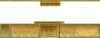
Isis
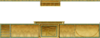
Ra
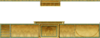
Set
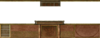
Odin

Thor
Loki


