The Cutting Room Floor
The Cutting Room Floor ist eine Website, die sich dem Aufdecken und Erforschen nicht verwendeter und entfernter Inhalte aus Videospielen widmet. Von Debug-Menüs bis hin zu nicht verwendeter Musik, Grafiken, Gegnern oder Level haben viele Videospiele Inhalte, die nur von den Entwicklern gesehen werden dürfen — oder sogar für alle gedacht, aber aus Zeit- oder Budgetgründen gekürzt wurden.
Stöbern Sie in unserer Sammlung von Spielen und beginnen Sie mit dem Lesen. Lust auf Recherche? Schauen Sie sich ein paar Stummel an und sehen Sie, ob Sie uns helfen können. Haben Sie nur eine schwache Erinnerung an ein unbenutztes Menü oder Level, das Sie vor Jahren gesehen haben, können sich aber nicht erinnern, wie Sie darauf zugreifen können? Fühlen Sie sich frei, eine Seite mit dem zu beginnen, was Sie gesehen haben, und wir werden einen Blick darauf werfen. Wenn Sie helfen möchten, diese Website am Laufen zu halten und weitere Forschungen zu Spielen durchzuführen, können Sie gerne spenden.
Vorgestellter Artikel
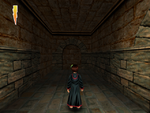


Developer: KnowWonder (Windows), Westlake Interactive (Macintosh)
Publisher: EA Games (Windows), Aspyr Media (Macintosh)
Released: 2001, Windows, Mac OS Classic, Mac OS X
The PC version of Harry Potter and the Sorcerer's Stone went through an accelerated development cycle in order to be released alongside the film of the same name. The game was mostly based on the original book by J.K. Rowling as Warner Bros. was extremely strict about releasing materials related to the highly anticipated film adaptation. The movie went on to become the top-grossing film of 2001, and the PC version similarly became one of the best-selling games of the year and continues to have a following of its own.
While the magical world of Hogwarts has many secrets to be found, the game's files are full of perhaps even more secrets that reveal much about what was going on behind the scenes. Remnants from the game's rushed development include an easily accessible debug mode, various assets for a scrapped Privet Drive level, tons of unused dialogue, and a plethora of other content intended for numerous features that were ultimately dropped.
All Featured BlurbsDid You Know...
- ...that the unlocking method for the Hornet vehicle in Daytona USA 2: Battle on the Edge was discovered after 22 years?
- ...that Donkey Kong 64 has a hidden rainbow coin collectible that took 17 years to be well known?
- ...that RoboCop on the Game Boy and Alien vs. Predator on the SNES were both planned to have password screens, but they ended up scrapped?
- ...that RoboCop vs. The Terminator thought that was a weird error, man?
- ...that this website's prickly mascot was originally intended to appear in Super Mario 64?
- ...that at one point in development, the green background in the 1990 Windows version of Solitaire could be changed to a bitmap image?
- ...that at least 46 games released on today's date have articles?
Mithelfen
Sie wollen uns helfen und wissen nicht wie? Sehen Sie sich die Hilfe-Seite an, um alles darüber zu erfahren wie Sie sich einbringen können, wie...
- Grundlagen zum Erstellen und Bearbeiten von Artikeln
- Anleitungen, die dir helfen Debug-Modi, unbenutzte Grafiken, versteckte Level und mehr zu finden
- Eine Liste an Dingen, die noch zu erledigen sind
- Häufig auftretende Dinge, die in Hunderten von verschiedenen Spielen zu finden sind
Wir haben auch eine große Liste an Spielen, die entweder noch keine Seiten haben oder deren Seiten dringend erweitert werden müssen. Schauen Sie sie an!
Featured File

A fully-functional unused feature allows you to name the player's mother in Pokémon Gold and Silver. This feature was used in the Spaceworld '97 demo's dummied-out story mode, where Silver offers you a choice between おかあさん (お母さん Mother), ママ (Mama), かあちゃん (母ちゃん Mommy), or choosing your own name. The name itself can be displayed in text via byte 49. The mother's name is initialized to MOM when RAM is initialized at boot.
Curiously, during the DUDE's Pokémon-catching tutorial, the player's name is copied over to the same location in RAM where the mother's name is stored. This suggests that by the time the tutorial was created, the naming mechanism was either already unused or deferred until the tutorial was no longer accessible.
Archive

